Aghagallon pedestrian death: court allegations put licence and insurance questions at centre of case

After Pauline Downing died following an Audi collision on the Lurgan Road, a 34-year-old was charged with careless driving causing death and three other motoring offences. The allegations have not been proved.
When Pauline Downing died after being struck by a car in Aghagallon on Friday 23 October, the first public record was a police appeal about a fatal pedestrian collision. Three days later, the case had moved into a courtroom — and the allegations were wider than a charge of careless driving causing death. A man was also accused of driving without a licence, without insurance and as an unaccompanied learner. Those allegations now sit before the criminal justice system. They are not findings of guilt.
The distinction matters. A bereaved family is waiting for answers about an event that killed a woman on a village road in the afternoon. The court must decide what the evidence proves about the defendant's conduct and legal driving status. The public deserves to understand both developments without treating a first hearing as the conclusion of a trial.
From a Lurgan Road collision to a court appearance
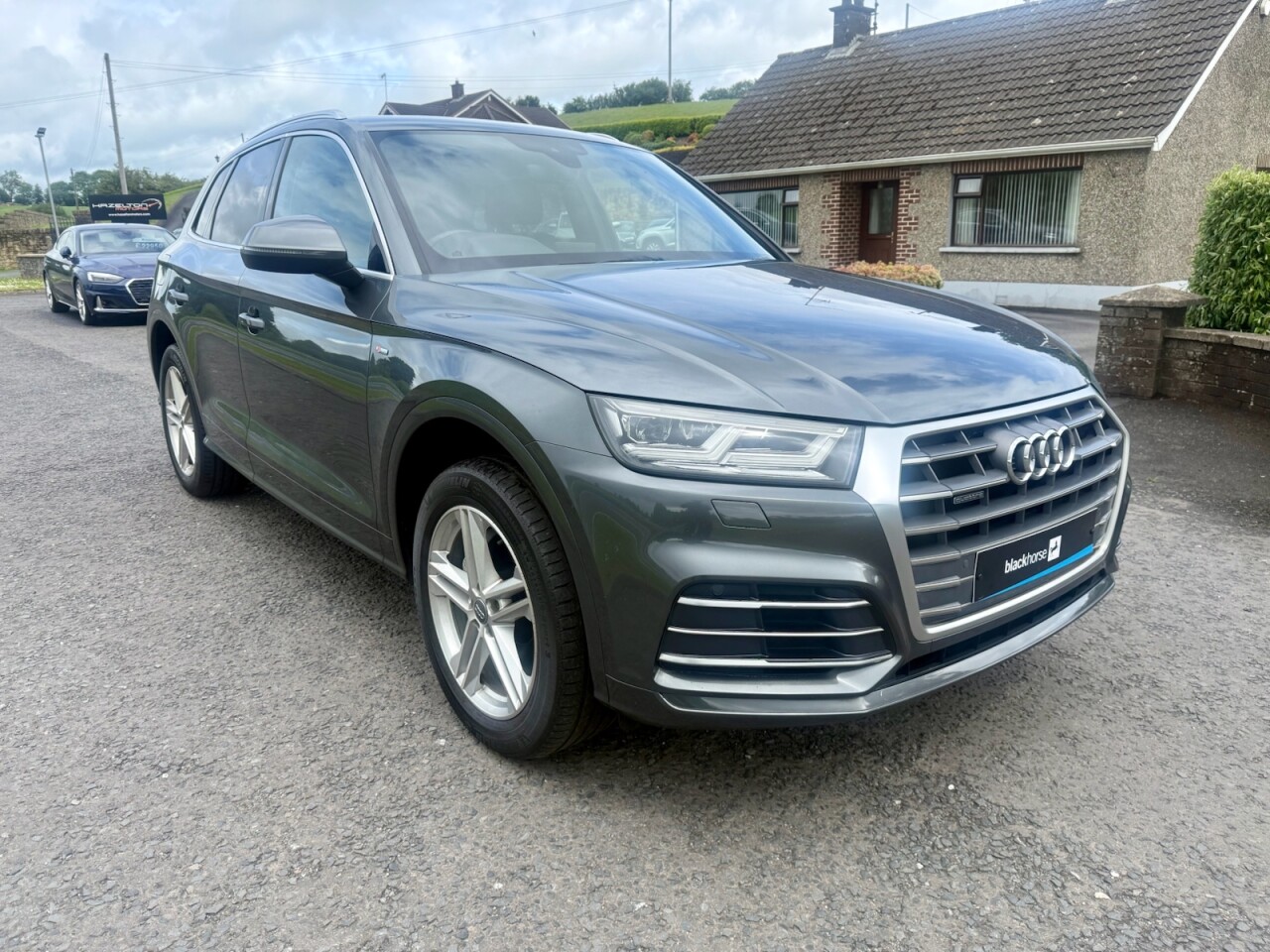
The PSNI reported receiving a call at about 2.50pm on Friday 23 October about a collision between a female pedestrian and a white Audi Q3 on Lurgan Road, Aghagallon. Officers and the Northern Ireland Ambulance Service attended. The woman, in her sixties, died at the scene. Police subsequently charged a 34-year-old man with motoring offences, including causing death by careless driving.
When the case reached Lisburn Magistrates' Court on Monday 26 October, public courtroom reporting identified the woman as Pauline Downing and the defendant as Mark Branagan, 34. UTV reported that the allegations included causing death by careless driving, having no driving licence, driving uninsured and driving without a supervising qualified driver while holding learner status. A detective said the defendant could be connected to the charges. The defence made no bail application, and the defendant was remanded in custody pending the next listed hearing.
The next court date was reported as Friday 30 October. The sources reviewed for this report establish the position at the initial hearing, but do not reliably establish the outcome of that later listing. It would be improper to imply that a plea, conviction, trial date or further bail ruling followed without checking a new, published court record.
Four charges do not equal four proven facts
The first charge is the gravest: causing another person's death by careless driving. It is a specific legal allegation that must be tested against evidence of the driving standard and its causal connection to the death. It cannot be substituted with the more serious allegation of causing death by dangerous driving simply because a fatality occurred. The criminal law distinguishes different standards of driving and requires proof of the offence charged.
The remaining allegations concern whether the driver was entitled to be behind the wheel in the circumstances described, whether the vehicle was insured and whether a person driving on learner status was properly accompanied. Each is a separate legal issue. Reporters must not assume those allegations will necessarily be admitted or established. Nor does an allegation of unaccompanied learner driving alone prove how the collision occurred.
There is another boundary. The public court reports examined do not establish the Audi's speed, whether any pedestrian crossing was involved, the exact place on the carriageway where the impact happened, visibility at the time or the result of a mechanical examination. No verified source reviewed alleges alcohol or drugs as a factor in this collision. Introducing any of those suggestions as though they were known facts would risk distorting an active case.
What the first court appearance actually tells us
A first appearance can establish that charges have been brought, the defendant's identity, the basic allegation, and how the court dealt with remand and future procedure. It does not usually provide the complete evidence file. In this case, UTV's report says the alleged facts were not opened in court at that hearing. A detective's statement that the defendant could be connected to the charges is an evidential step at that stage, not a verdict.
Public reporting also records that no bail application was made. That should be described exactly; it is not equivalent to a judge finding that an application was unmeritorious or rejecting a contested request. The most defensible description is that the defendant was remanded in custody at the initial hearing when the defence did not seek bail.
The PSNI had already warned in its charging statement that, as normal procedure, the Public Prosecution Service would review the charges. The PPS is independent of police and assesses cases according to evidential and public-interest criteria. A police charge and subsequent prosecution decisions are connected parts of a process, but they are not the same event.
The victim must not disappear behind the list of allegations
Pauline Downing was a person, not an illustration of an insurance offence. Contemporary local reporting described her as a mother of two. Her death at the scene was confirmed by the police account. A responsible story should not speculate about her intended journey, whether she could have taken a different route, or what she might have seen in the seconds before the impact. None of that is established by the public evidence available.
Road deaths involving pedestrians create an acute imbalance of physical protection. The driver of a car is inside a vehicle; the pedestrian is not. That fact justifies examining pedestrian safety in the wider road network, but it does not decide criminal liability in one particular case. The 2025 PSNI calendar-year figures show pedestrians were 19.0% of people killed or seriously injured despite representing 7.7% of all recorded casualties. The figures show how disproportionately severe pedestrian outcomes can be; they do not tell us what caused the Aghagallon collision.
Nor should the relatively small scale of a village be used to romanticise or catastrophise what happened. The available official source identifies the Lurgan Road location, vehicle type, time of police report and the fact of death. It does not provide enough evidence to call that section a recognised blackspot, describe a repeated collision pattern or claim a particular layout fault. A local road-safety review would need its own records and engineering assessment.
The unresolved public-interest questions
The criminal proceedings will address the precise allegations against one defendant. But families and local residents may reasonably want a more complete account: what sequence of movements preceded the collision; what did the collision investigation establish about the vehicle and the road environment; and will any findings be passed to the road authority for a safety assessment? Those are questions, not suggestions that an undisclosed failure has been discovered.
The relevant distinction is between examining possible measures and announcing them as solutions before the evidence exists. A speed reduction, crossing change, revised road markings, better visibility or enforcement programme could all be appropriate in some circumstances; none can be prescribed for this precise incident on the published statements alone. The police investigation and the road authority's duties are related, but not interchangeable.
For potential witnesses, the PSNI appeal remains specific. It asked anyone with information or dashcam footage to contact officers, quoting reference 949 of 23/10/26. Evidence should go to investigators rather than be circulated online with claims about a person's responsibility.
A developing case, not a closed investigation
As at 3 November 2026, the verified public sequence is a fatal collision on 23 October, an announcement of charges on 25 October and a court appearance on 26 October. Reports of the hearing identified four allegations and recorded a remand. There is no basis in the examined material to write as though the accused has been convicted, or to suggest that a first court appearance has already answered how Pauline Downing died.
Continued scrutiny is warranted because the case concerns a pedestrian's death and allegations reaching beyond the collision itself into licensing and insurance. But trustworthy scrutiny starts by maintaining the presumption of innocence, preserving the victim's dignity and distinguishing a prosecutor's case from facts established in court.
Sources: PSNI collision and charging statements of 24–25 October 2026; UTV and local reporting of the Lisburn Magistrates' Court hearing; PSNI guidance on collision investigation; NISRA's 2025 casualty publication.