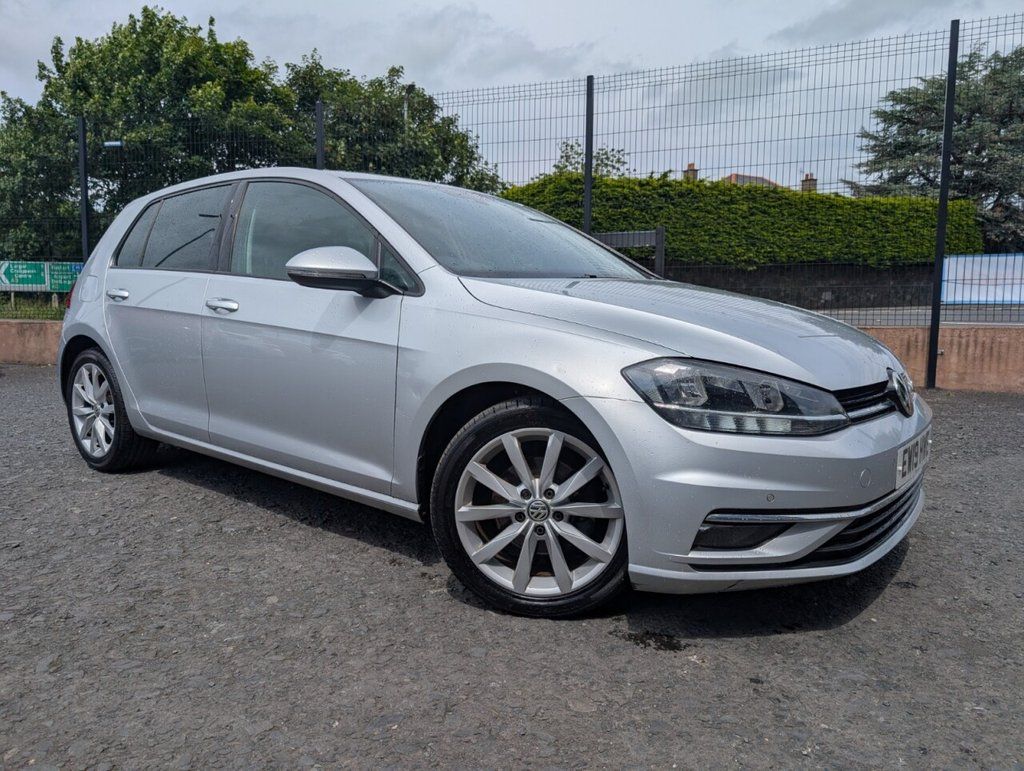
Which used cars disappear fastest from PureCar? Early Northern Ireland listing-history data

PureCar’s market-history pages currently show a 57-day typical advertised period for the Skoda Octavia before leaving recorded stock, compared with 112 days for the SEAT Ibiza and 163 days for the Volvo XC60. That does not mean every removed advert was sold.
Data checked 21 September 2026. PureCar has begun exposing a metric that can answer a question most used-car marketplaces leave vague: how long does a model typically remain advertised before it leaves recorded stock?
Among the Northern Ireland model pages currently exposing a usable “typical time advertised” figure, the Skoda Octavia is the shortest at 57 days, followed by the SEAT Ibiza at 112 days and the Volvo XC60 at 163 days.
But there is an important rule for interpreting this data: leaving recorded stock does not prove a car was sold. An advert can disappear because it sold, was withdrawn, moved between feeds, expired, duplicated, was removed by a dealer or left the recorded dataset for another reason.
PureCar listing-history snapshot
| Model | Typical time advertised before leaving recorded stock | Historical price observations | Typical recorded price |
|---|---|---|---|
| Skoda Octavia | 57 days | 169 | £13,698 |
| SEAT Ibiza | 112 days | 220 | £11,170 |
| Volvo XC60 | 163 days | 168 | £24,248 |
Each page displays a recorded-history period of 3 September to 13 September 2026 and a count of recorded price observations. PureCar describes the time metric as “typical time advertised” before leaving recorded stock.
The Octavia leaves recorded stock fastest in this available sample
At 57 days, the Skoda Octavia's published figure is roughly half the SEAT Ibiza's 112 days and about one third of the Volvo XC60's 163 days.
That is a meaningful difference inside this small comparison, but it is not yet enough to declare the Octavia the fastest-selling used car in Northern Ireland. First, “left recorded stock” is not the same as “sold”. Second, only models with a supported PureCar time metric can be compared. Third, the system is still building history.
Why PureCar should not call removed adverts “sold”
A marketplace normally sees the advert status, not the final transaction. Unless the seller explicitly confirms a sale, there can be several explanations for disappearance:
- the vehicle sold;
- the seller withdrew it;
- the dealer changed feed provider or stock feed;
- a duplicate advert was removed;
- the vehicle moved to a different account or listing;
- the advert expired or was manually deleted; or
- a feed interruption caused it to leave the recorded stock temporarily.
Calling every exit a sale would turn a useful stock-movement metric into a misleading sales statistic. The wording “before leaving recorded stock” is deliberately more accurate.
Why some PureCar model pages have no time figure
The current Skoda Karoq market page, for example, exposes price and mileage history but does not show a “typical time advertised” metric. That is a useful sign of data discipline: when the history is not sufficient to support a figure, the correct result is no figure rather than a guess.
For this article, models without a published time metric are excluded instead of being assigned an estimated duration.
Does a shorter time in stock mean stronger demand?
Possibly, but not automatically. Stock duration can be affected by:
- asking price;
- vehicle age and mileage;
- number of competing examples;
- trim, engine and gearbox;
- dealer repricing behaviour;
- seasonality;
- feed quality and advert management; and
- the balance between newly added and older stock.
A short recorded duration can be consistent with strong buyer demand, attractive pricing or simply a changing stock feed. A longer duration can reflect higher price, narrower demand or a model mix that takes longer to clear. The time metric is evidence, not a complete explanation.
How sellers can use the metric
For a seller, model-level stock duration is useful when combined with asking-price data. If similar cars are leaving recorded stock much faster than yours, it can prompt a review of price, photographs, description, condition or specification.
It should not trigger an automatic price cut. A rare specification or unusually low-mileage example may reasonably sit above the market for longer.
How buyers can use the metric
For buyers, a shorter typical stock duration suggests that good examples may not remain available indefinitely. That can justify being prepared — finance arranged, insurance checked and shortlist clear — without rushing into a car that has not been properly inspected.
A long stock duration can create more negotiating context, but it can also be a reason to ask why a specific car has remained advertised.
What this early data can become
Once PureCar accumulates a longer history across more models, the analysis can become much stronger. Useful future measures include:
- median days in recorded stock by make and model;
- time in stock by price band and age;
- the relationship between price reductions and stock exit;
- newly listed versus long-standing inventory; and
- repeat-entry detection so a relisted car is not mistaken for a completely new vehicle.
Those additions would allow PureCar to discuss liquidity in the NI used-car market without pretending to know the final transaction where it does not.
Frequently asked questions
Which model leaves PureCar stock fastest in this comparison?
The Skoda Octavia, with a published typical time advertised of 57 days before leaving recorded stock.
Does “leaving recorded stock” mean the car sold?
No. Sale is one possible reason, but withdrawal, feed changes, deletion, duplication cleanup and other causes can also remove an advert.
Why are only three models compared?
They are the current Northern Ireland model pages found in this research that publish a supported time-advertised figure with substantial recorded price observations. Models without a time figure are excluded.
Is 57 days a median?
PureCar currently labels the metric “typical time advertised”. This article preserves that wording rather than relabelling it as a median without documentation proving the calculation method.
Methodology
The comparison uses the PureCar Northern Ireland market-history pages for the Skoda Octavia, SEAT Ibiza and Volvo XC60. It reports the time metric exactly as PureCar labels it and preserves the site's wording “before leaving recorded stock”. No removed advert is counted as a confirmed sale.